- info@alkounsar.co.in
- 919622220465 , 918171223344 , 01954231112
- Palhallan Pattan Baramulla Jammu and Kashmir
Riyaz-ul-Jannah/رِيَاضُ الْجَنَّةِ
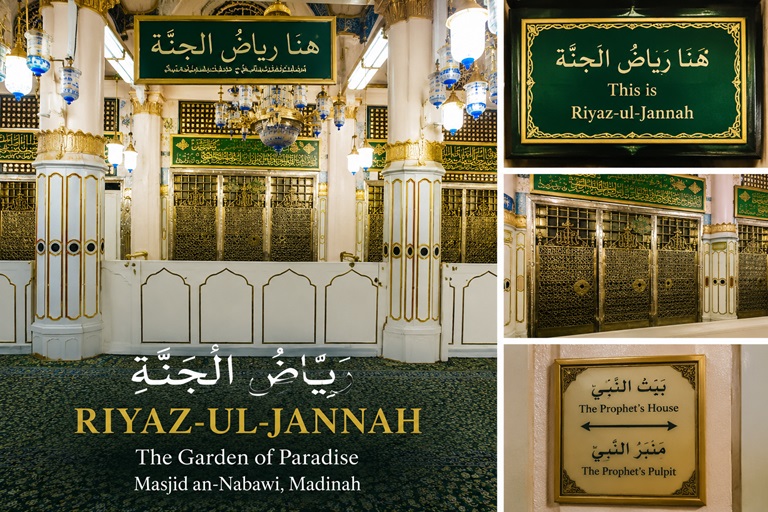
Riyaz-ul-Jannah (Rawdah) is a blessed area inside Masjid an-Nabawi ﷺ in Madinah Al-Munawwarah, located between the Prophet Muhammad’s ﷺ house and his Minbar. The Prophet ﷺ described it as “a garden from the gardens of Paradise.” It is a special place where pilgrims pray, remember Allah, send Salawat upon the Prophet ﷺ, and make sincere Du'a with humility and respect.
Destination Overview
Riyaz-ul-Jannah (رِيَاضُ الْجَنَّةِ), commonly called Rawdah, is one of the most spiritually significant places within Al-Masjid an-Nabawi ﷺ in Madinah Al-Munawwarah. The name literally means “Gardens of Paradise.” It is the blessed area located between the house/chamber of Prophet Muhammad ﷺ and his Minbar (pulpit).
🌹 The Meaning of Riyaz-ul-Jannah
The Arabic expression رِيَاضُ الْجَنَّةِ (Riyāḍ al-Jannah) means “Gardens of Paradise.”
The Prophet Muhammad ﷺ said:
“Between my house and my pulpit is a garden from the gardens of Paradise.”
This hadith is narrated in Sahih al-Bukhari and Sahih Muslim and is the principal basis for the special significance Muslims attach to the Rawdah.
The statement reminds believers of the extraordinary blessing of this place and encourages them to use their visit for Salah, remembrance of Allah, recitation of the Qur'an and sincere Du'a.
🕌 Location of the Rawdah
The Rawdah is situated inside Al-Masjid an-Nabawi ﷺ, between the Prophet's ﷺ residence and his Minbar.
The Prophet's ﷺ chamber is today associated with the area where the Sacred Chamber is located. The Minbar is located toward the front of the mosque. The Rawdah lies between these two historically significant locations.
Today, the Rawdah is recognizable by its distinctive green carpet, which differentiates it from much of the surrounding prayer area.
🤲 What Should a Pilgrim Do in Riyaz-ul-Jannah?
When granted access, a pilgrim should use the opportunity peacefully and respectfully.
1. Perform Salah
If space and time permit, one may perform voluntary prayer. The worshipper should avoid disturbing others and should follow the instructions of the mosque authorities.
2. Make Du'a
A pilgrim may make sincere Du'a to Allah alone. There is no authentic requirement that one specific Du'a must be recited in the Rawdah.
You may ask Allah for:
Forgiveness of sins
Mercy and guidance
Acceptance of your Umrah
Stronger Iman
Blessings for your family
Protection from difficulties
Goodness in this life and the Hereafter
Jannah and protection from the Hellfire
3. Recite Dhikr
The visitor may engage in permissible forms of Dhikr, such as glorifying Allah, praising Him, seeking His forgiveness and sending Salawat upon Prophet Muhammad ﷺ.
4. Send Salam Upon the Prophet ﷺ
When visiting the Prophet's Mosque, Muslims should send Salam upon Prophet Muhammad ﷺ with respect and humility.
A simple form is:
السَّلَامُ عَلَيْكَ يَا رَسُولَ اللَّهِ
As-salāmu ‘alayka yā Rasūlallāh.
Meaning:
“Peace be upon you, O Messenger of Allah.”
🌸 Riyaz-ul-Jannah Is Not a Place for a Special Mandatory Ritual
It is important to understand that there is no specific Salah, number of Rak'ahs, or particular Du'a that is obligatory solely because a person enters the Rawdah.
The special virtue of the Rawdah comes from the authentic statement of the Prophet ﷺ describing the area as a garden from the gardens of Paradise.
Therefore, pilgrims should concentrate on sincere worship rather than worrying about completing a particular ritual.
🕊️ The Importance of Adab
A visit to the Rawdah should be made with Adab (respect).
Pilgrims should:
Remain calm and patient.
Keep their voices low.
Avoid pushing or rushing other worshippers.
Follow the instructions of mosque staff.
Avoid blocking entrances and walkways.
Give others an opportunity to worship.
Avoid arguing over prayer spaces.
Keep the area clean.
Focus on worship rather than unnecessary photography.
The spiritual value of the visit should be reflected in one's humility, patience and good manners.
📱 Riyaz-ul-Jannah Appointment
Access to the Rawdah is regulated by the authorities. Pilgrims generally need to obtain an appointment/permit through the official Nusuk system, subject to the rules and availability applicable at the time of their visit.
For an Umrah group, the travel company or group leader may guide pilgrims regarding the process, but appointment availability is controlled by the relevant authorities.
Therefore, an appointment should not be presented as something a travel company can guarantee independently.
❤️ Why Is the Rawdah So Special?
For a Muslim visiting Madinah, standing in the Prophet's ﷺ Mosque and being granted the opportunity to pray in the Rawdah can be deeply emotional and spiritually meaningful.
The significance is not simply the physical space. It reminds the believer of:
The life and teachings of Prophet Muhammad ﷺ
His sacrifice for the Ummah
His Sunnah
The importance of Salah
The mercy and guidance of Allah
The responsibility of following the Prophet ﷺ
A pilgrim should therefore leave the Rawdah with a renewed commitment to Sunnah, good character, worship and obedience to Allah.
🌿 A Special Reminder for Pilgrims
Do not become so concerned with obtaining a particular place in the Rawdah that you forget the purpose of the visit. Allah hears Du'a wherever His servant sincerely calls upon Him.
If you receive the opportunity to enter the Rawdah, thank Allah, worship Him sincerely, send abundant Salawat upon the Prophet ﷺ, and maintain excellent Adab toward fellow pilgrims.
🤲 Beautiful Du'a
اللَّهُمَّ اغْفِرْ لِي وَارْحَمْنِي وَاهْدِنِي وَتَقَبَّلْ عُمْرَتِي وَزِيَارَتِي
Allahumma’ghfir li warhamni wahdini wa taqabbal ‘umrati wa ziyārati.
Meaning:
“O Allah, forgive me, have mercy upon me, guide me, and accept my Umrah and my visit.”
May Allah grant every pilgrim the opportunity to visit Madinah Al-Munawwarah, enter Riyaz-ul-Jannah with ease and Adab, send sincere Salam upon Prophet Muhammad ﷺ, and return home with a heart strengthened in Iman. Ameen.
Destination Highlights
🌿 Meaning: Riyaz-ul-Jannah means “Gardens of Paradise.”
🕌 Located in Masjid an-Nabawi: It is the blessed area in the Prophet’s Mosque ﷺ in Madinah.
❤️ Between the Prophet’s House and Pulpit: The Prophet ﷺ said: “Between my house and my pulpit is a garden from the gardens of Paradise.” (Sahih al-Bukhari; Sahih Muslim)
🤲 A place of worship: Visitors pray, make du‘a, perform dhikr, and seek Allah’s mercy and blessings.
🕊️ Special spiritual atmosphere: It is regarded as one of the most spiritually cherished places within Masjid an-Nabawi.
📖 Prayer and remembrance: Devotees use their time there for Salah, Qur’an recitation, istighfar, and supplication.
🌙 Part of the Madinah pilgrimage: Visiting Riyaz-ul-Jannah is a cherished experience for many pilgrims performing Hajj and Umrah.
🕌 Near the Prophet’s ﷺ chamber: It is situated close to the blessed area associated with the Prophet Muhammad ﷺ.
🤍 Respect and humility: Visitors should maintain calmness, avoid pushing or disturbing others, and observe the sanctity of the mosque.
📱 Visit arrangements: Access to the Rawdah/Riyaz-ul-Jannah may be regulated by the authorities, including designated visiting arrangements and permits.
Photo Gallery
Other Destinations


Quick Facts
Location:
Riyaz-ul-Jannah/رِيَاضُ الْجَنَّةِ
Best Time to Visit:
Year-round destination
Climate:
Temperate, varies with seasons
Altitude:
Varies across the region
Need Help?
Our travel experts can help you plan your perfect trip to Riyaz-ul-Jannah/رِيَاضُ الْجَنَّةِ.
Contact Us Browse All Packages