- info@alkounsar.co.in
- 919622220465 , 918171223344 , 01954231112
- Palhallan Pattan Baramulla Jammu and Kashmir
Jannat al-Baqi/Al-Baqi Cemetery
Jannat al-Baqi, also known as Baqi al-Gharqad, is the oldest and most revered cemetery in Madinah, located adjacent to the Prophet's Mosque. It is the resting place of thousands of the Prophet Muhammad's (ﷺ) companions, family members, wives (Mothers of the Believers), and many prominent figures of early Islam. For Muslims visiting Madinah, Jannat ul-Baqi is a place of reflection, remembrance, and supplication, symbolizing the rich spiritual and historical legacy of Islam.
Destination Overview
Jannat al-Baqi, also known as Baqi al-Gharqad, is the oldest and most significant Islamic cemetery in Madinah, Saudi Arabia. Situated immediately to the southeast of the Al-Masjid an-Nabawi (the Prophet's Mosque), it holds immense spiritual and historical importance for Muslims around the world. Established during the lifetime of Prophet Muhammad (ﷺ), the cemetery has served as the final resting place for thousands of the Prophet's companions (Sahabah), members of his family (Ahl al-Bayt), wives (the Mothers of the Believers), and many distinguished scholars and righteous believers throughout Islamic history.
The name "Baqi" refers to a field or open land, while "al-Gharqad" refers to the thorny trees that once grew in the area. Over the centuries, Jannat ul-Baqi has become one of the most visited Islamic heritage sites, attracting millions of pilgrims performing Hajj and Umrah who come to pay their respects and remember the lives of those who dedicated themselves to Islam.
Historical Significance
After the migration (Hijrah) of Prophet Muhammad (ﷺ) from Makkah to Madinah in 622 CE, Jannat ul-Baqi was designated as the main cemetery for the Muslim community. The first person buried there was As'ad ibn Zurarah (RA), one of the earliest supporters of Islam in Madinah.
The Prophet (ﷺ) personally visited Jannat ul-Baqi on numerous occasions to offer prayers for those buried there and encouraged Muslims to remember death and make supplications for the deceased. Visiting the cemetery serves as a reminder of the temporary nature of worldly life and the eternal life of the Hereafter.
Notable Personalities Buried in Jannat ul-Baqi
Jannat ul-Baqi is believed to contain the graves of thousands of Muslims, including many of the most respected figures in Islamic history, such as:
Four daughters of Prophet Muhammad (ﷺ), including Sayyidah Fatimah (RA) according to one historical view, though the exact location of her grave remains a matter of scholarly discussion.
Many of the Prophet's wives (Mothers of the Believers), including:
Sayyidah Aisha (RA)
Sayyidah Hafsa (RA)
Sayyidah Umm Salama (RA)
Sayyidah Zaynab bint Khuzaymah (RA)
Sayyidah Juwayriyah (RA)
Sayyidah Safiyyah (RA)
Sayyidah Umm Habibah (RA)
Uthman ibn Affan (RA), the third Caliph of Islam.
Hasan ibn Ali (RA).
Ali ibn Husayn Zayn al-Abidin.
Muhammad al-Baqir.
Ja'far al-Sadiq.
Numerous companions (Sahabah), martyrs, scholars, and early Muslims.
Spiritual Importance
Jannat ul-Baqi is one of the holiest cemeteries in Islam. Visiting it allows Muslims to:
Remember the sacrifices of the companions and family of the Prophet (ﷺ).
Reflect on the reality of death and the Hereafter.
Offer prayers and supplications for the deceased.
Strengthen their connection with Islamic history.
Pilgrims are encouraged to recite the authentic supplication taught by Prophet Muhammad (ﷺ) when visiting cemeteries and to avoid practices not established in the Sunnah.
Present-Day Appearance
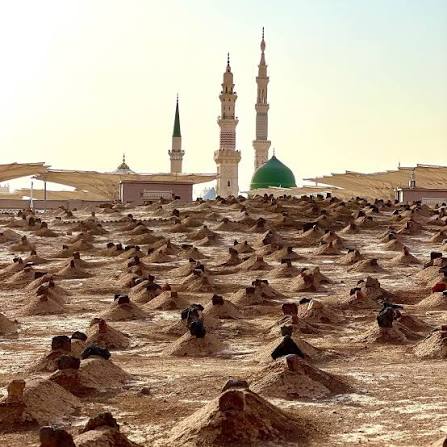
Unlike many historical cemeteries, Jannat ul-Baqi has a simple and unadorned appearance. The graves are marked modestly without elaborate structures or monuments, reflecting the Islamic principles of humility and equality in death. The cemetery is enclosed by protective walls and is managed by the Saudi authorities. Access is generally regulated, and visiting hours may vary.
Visiting During Umrah and Hajj
Most pilgrims visiting Madinah include Jannat ul-Baqi in their itinerary after offering prayers at Al-Masjid an-Nabawi. While visiting the cemetery is not an obligation of Hajj or Umrah, it is a recommended act for those wishing to remember the deceased and reflect on the lives of the early Muslims. Visitors should observe proper Islamic etiquette by maintaining respect, making sincere du'a for the deceased, and following the guidelines established by the local authorities.
Destination Highlights
Oldest Islamic Cemetery – Jannat ul Baqi is the first and most revered Islamic cemetery in Madinah, established during the lifetime of Prophet Muhammad (ﷺ).
Located Beside Masjid an-Nabawi – Situated adjacent to the Prophet's Mosque, it is one of the most visited Ziyarat sites by pilgrims performing Umrah and Hajj.
Resting Place of the Prophet's Family – Several members of the Prophet Muhammad's (ﷺ) family (Ahl al-Bayt), including his daughters (except Fatimah according to the strongest historical reports), are buried here.
Burial Place of the Sahabah – Thousands of the Prophet's companions (Sahabah) are buried in Jannat ul Baqi, making it one of Islam's most significant historical cemeteries.
Graves of the Mothers of the Believers – Many of the wives of Prophet Muhammad (ﷺ), known as the Mothers of the Believers (Ummahat al-Mu'minin), are buried here.
Historic Islamic Heritage Site – The cemetery has remained an important part of Islamic history for over 1,400 years.
Place of Reflection and Supplication – Pilgrims visit Jannat ul Baqi to remember the Hereafter and offer supplications for the deceased, following the Sunnah of the Prophet (ﷺ).
Simple and Humble Graves – The graves are intentionally unmarked and modest, reflecting the Islamic principles of equality, humility, and simplicity.
A Major Madinah Ziyarat Destination – Jannat ul Baqi is included in nearly every guided Ziyarat itinerary for visitors to Madinah.
Spiritual Significance – Visiting Jannat ul Baqi reminds Muslims of the temporary nature of worldly life and encourages reflection on faith, righteousness, and the Hereafter.
Photo Gallery
Other Destinations


Quick Facts
Location:
Jannat al-Baqi/Al-Baqi Cemetery
Best Time to Visit:
Year-round destination
Climate:
Temperate, varies with seasons
Altitude:
Varies across the region
Need Help?
Our travel experts can help you plan your perfect trip to Jannat al-Baqi/Al-Baqi Cemetery.
Contact Us Browse All Packages